
When sourcing industrial seating, buyers often encounter two similar terms:
Forklift Seat & Material Handling Seat
They are frequently used interchangeably-but in reality, they serve different purposes and buying decisions. Understanding the difference helps maintenance teams, fleet managers, and distributors choose the right seat faster and with fewer mistakes.

What Is a Forklift Seat?
A forklift seat is a seat specifically designed for forklift trucks, including:
- Counterbalance forklifts
- Electric forklifts
- LPG / diesel forklifts
- Warehouse forklifts
Typical Characteristics of Forklift Seats
Compact footprint to fit tight operator compartments
Standard bottom mounting patterns
Optional seat belt and operator presence switch
Moderate fore-and-aft adjustment range
Durable PVC or vinyl covers for industrial use
Forklift seats are usually designed around the most common forklift structures, making them the highest-volume and most standardized seating category in material handling.
What Is a Material Handling Seat?
Material handling seat is a broader category that includes seats used on all types of industrial equipment involved in moving goods, not just forklifts.
Equipment That Uses Material Handling Seats
Forklifts
Reach trucks
Tow tractors
Electric platform carts
Warehouse utility vehicles
Sit-stand and order-picking equipment
In other words:
Forklift seats are a subset of material handling seats.

| Aspect | Forklift Seat | Material Handling Seat |
|---|---|---|
| Scope | Forklifts only | Multiple industrial vehicles |
| Design focus | Compact & standardized | Application-specific |
| Volume | Very high | Medium to high |
| Customization | Limited but standardized | Often higher |
| Buyer intent | Replacement & OEM | Fleet & application-based |
Why Forklift Seats Dominate the Market?
Forklifts represent:
The largest installed base of material handling equipment
The highest replacement frequency
The most standardized mounting systems
That's why most buyers searching for material handling seating are actually looking for a forklift seat replacement-even if they don't realize it yet.
When You Need a "Material Handling Seat" Instead of Just a Forklift Seat
A general forklift seat may not be the best choice when:
You operate mixed fleets (forklifts + tow tractors + utility vehicles)
Operators frequently switch machines
Space constraints require foldable or low-profile seating
Equipment is not a traditional forklift (e.g. platform trucks)
In these cases, a universal material handling seat offers better flexibility.
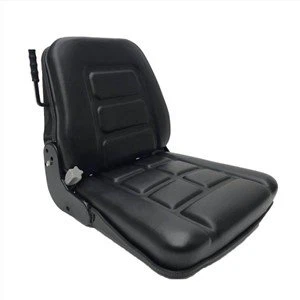
Universal Seats: Where the Two Categories Meet?
Universal seats bridge the gap between forklift seats and material handling seats.
They are designed to:
Fit multiple machine types
Use common industry mounting patterns
Offer extended adjustment ranges
Reduce inventory complexity for maintenance teams
This is why universal seats are widely used by:
Warehouse operators
Rental companies
Maintenance contractors
Distributors handling multiple brands
Choosing the Right Seat: What Matters Most
Instead of asking:
"Is this a Toyota forklift seat?"
Ask:
How is the original seat mounted?
Does the machine use integrated electronics?
Is this a single machine or a mixed fleet?
How often do operators change equipment?
These questions lead to better compatibility and fewer installation issues.

How JMSeat Supports Both Needs?
JMSeat manufactures seating solutions for:
Forklift seat replacement
Universal material handling applications
Foldable seats for space-limited equipment
OEM and aftermarket supply
Our seats are designed with:
Standard mounting compatibility
Adjustable slide ranges
Industrial-grade materials
Optional safety components
👉 If you are unsure whether your application requires a forklift seat or a material handling seat, our team can help you identify the best option.


