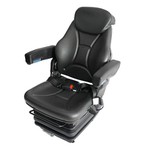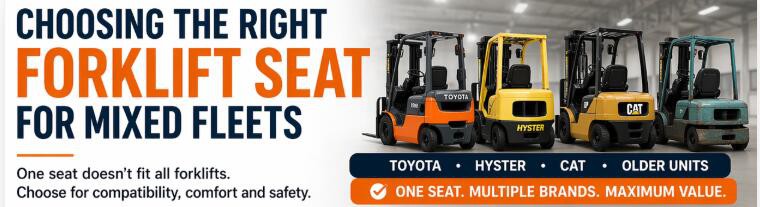
Managing a mixed forklift fleet-whether in warehouses, logistics centers, or rental operations-creates a unique challenge when it comes to seat replacement.
Different brands, models, and production years mean:
different mounting patterns
different seat sizes
different operator requirements
That's why one of the most common questions fleet managers ask is:
How do I choose a forklift seat that works across multiple machines?
The answer is not choosing multiple seats-it's choosing the right type of seat.
Why Mixed Fleets Create Seat Replacement Problems
A typical warehouse fleet may include:
Toyota forklifts
Hyster or Yale units
Komatsu or Doosan models
Even within one brand, differences in:
model series
production year
mounting base
can make seat replacement inconsistent.
Common issues:
❌ Each forklift needs a different seat
❌ Spare parts inventory becomes complex
❌ Downtime increases waiting for specific parts
❌ Operators experience inconsistent comfort
👉 This is why traditional OEM seat replacement doesn't scale well in mixed fleets.
What Actually Matters for Mixed Fleet Seat Selection
Instead of brand-specific seats, professional buyers focus on standardization.
Mounting Compatibility (Top Priority)
The most critical factor is mounting flexibility.
Universal forklift seats solve this by using:
slotted mounting holes
adjustable mounting ranges
Many universal seats are designed to cover common bolt patterns across brands
👉 This allows one seat model to fit multiple forklifts.
Adjustment Range for Multiple Operators
In mixed fleets, forklifts are often shared.
That means seats must support:
different operator heights
different working styles
Typical requirement:
Slide travel: 120–150 mm
Many universal seats include adjustable rails to accommodate different drivers
Durability for High Turnover Use
Mixed fleets usually operate in:
warehouses
logistics hubs
rental environments
This leads to:
frequent mounting/dismounting
high wear on seat edges
exposure to dust and oil
High-quality universal seats use:
PVC/vinyl coverings
reinforced frames
high-density foam
These materials are designed for industrial durability
Suspension for Operator Fatigue
Even warehouse forklifts generate vibration from:
uneven concrete
loading ramps
repetitive motion
Suspension seats reduce vibration and long-term strain
👉 Mechanical suspension is the most practical choice for fleets.
Why Universal Seats Are the Best Strategy for Mixed Fleets
From a fleet management perspective, the goal is not just comfort-it's operational efficiency.
Universal seats help you:
✔ Reduce spare part SKUs
✔ Simplify maintenance
✔ Minimize downtime
✔ Standardize operator experience
👉 This is why many warehouses standardize on one universal seat model across their fleet.
Common Mistakes Fleet Managers Make
❌ Buying OEM seats for each forklift
❌ Ignoring mounting compatibility
❌ Overlooking multi-operator ergonomics
❌ Choosing lowest price instead of lifecycle cost
Final Recommendation
For mixed fleets, the best solution is:
👉 A universal forklift seat with:
adjustable mounting
mechanical suspension
durable materials
sufficient slide travel
This approach balances:
compatibility
cost
comfort
efficiency
FAQ – Forklift Seats for Mixed Fleets
Q1: Can one seat fit multiple forklift brands?
Yes. Universal seats are designed to fit common mounting patterns across brands.
Q2: Why not use OEM seats?
OEM seats are model-specific and increase inventory complexity in mixed fleets.
Q3: Is suspension necessary in warehouses?
Yes. Even small vibrations over long shifts cause fatigue.
Q4: What is the most important feature?
Mounting compatibility combined with durability.
Q5: How do I standardize seats across my fleet?
Choose a universal seat with adjustable mounting and use it across all compatible forklifts.