


If you plan to private-label (OEM/ODM) simulated racing seats, choosing the right manufacturing partner matters. Here's a concise, practical guide comparing general furniture factories with specialized seat manufacturers and how to pick the right supplier.

Prefer specialized seat manufacturers for most simulated racing-seat projects.
Simulated racing seats combine mechanical structure, safety-related load paths, custom hardware (sliders, reclining mechanisms, mounting points), multi-density foams, and precise upholstery. Getting those elements right affects comfort, durability, safety, and user satisfaction - and these are areas where experience and factory capability make a big difference.

Side-by-side comparison
- Structural design & ergonomics:
Seat manufacturers - specialized knowledge of skeletons, side bolsters, and racing posture.
Furniture factories - geared to sofas/chairs; less expertise on racing posture details.
- Metalwork & dedicated hardware:
Seat manufacturers - in-house stamping, welding, custom brackets, sliders and mounting interfaces.
Furniture factories - can fabricate metal parts but may lack racing-seat specific tooling or standards.
- Foam & fill processes:
Seat manufacturers - controlled multi-density foam shaping, memory foam options, precise contouring.
Furniture factories - competent at large-scale padding, but fine contouring and foam zoning may be inferior.
- Upholstery & seams:
Seat manufacturers - fine stitches, piping, sport fabrics, breathable mesh and tight fit for contoured shells.
Furniture factories - strong at broad-surface upholstery; complex racer seams and assembly more challenging.
- Assembly & part integration:
Seat manufacturers - used to installing sliders, recline mechanisms, harness pass-throughs and delivering ready-to-mount seats.
Furniture factories - may need external sourcing for these items.
- Quality control & testing:
Seat manufacturers - familiar with load/seat durability testing and related standards.
Furniture factories - QC geared to furniture norms; may not run seat-specific tests.
- Cost & MOQ:
Furniture factories may offer lower per-piece cost for very simple parts, but hidden costs (external sourcing, rework) can raise total cost. Seat factories typically charge more for higher-quality outputs but reduce iteration and warranty costs.
- Lead time & flexibility:
Specialized seat shops usually accept mid-to-small batch OEM work and iterate faster on tooling. Large furniture shops may prefer high-volume runs and have longer setup times.
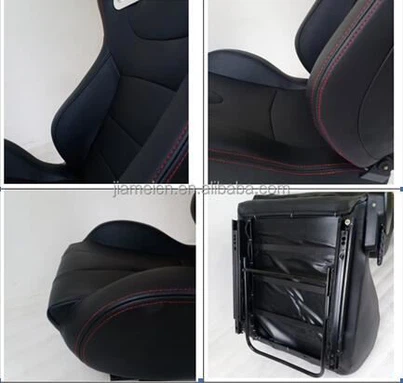
When to choose a specialized seat manufacturer?
You need true racing-seat geometry, side bolsters, harness compatibility, or specific mounting interfaces.
You require reliable mechanical parts (sliders, recline, brackets) and consistent assembly quality.
You want engineering support for prototyping, testing, and iterative improvements.
You expect mid-to-low volume custom runs (sample development, pilot batches).
When a furniture factory is acceptable?
Your product is essentially a soft cover, cushion, or visually "racer-like" chair without specialized mounting or load-bearing features.
You're producing simple, very low-cost visual variants at very high volumes and can accept compromises in ergonomic fidelity.
You already source or accept third-party hardware (sliders, frames) and only need upholstery/soft-assembly.
Practical steps to source the right OEM partner.
Specialized seat manufacturers: higher upfront cost, but lower rework, stronger functional performance, and easier certification. Better long-term ROI if product function and durability matter.
Furniture factories: lower sticker price for simple soft products, but potential extra costs for external hardware, more iterations, and quality risks.
If your product must perform like a racing seat - correct posture, secure mounts, harness compatibility, and durable mechanisms - go with a dedicated seat manufacturer. If you only need a low-cost, visually racing-style cushion or upholstery at very high volume and can accept functional compromises, a furniture factory can be workable.


